
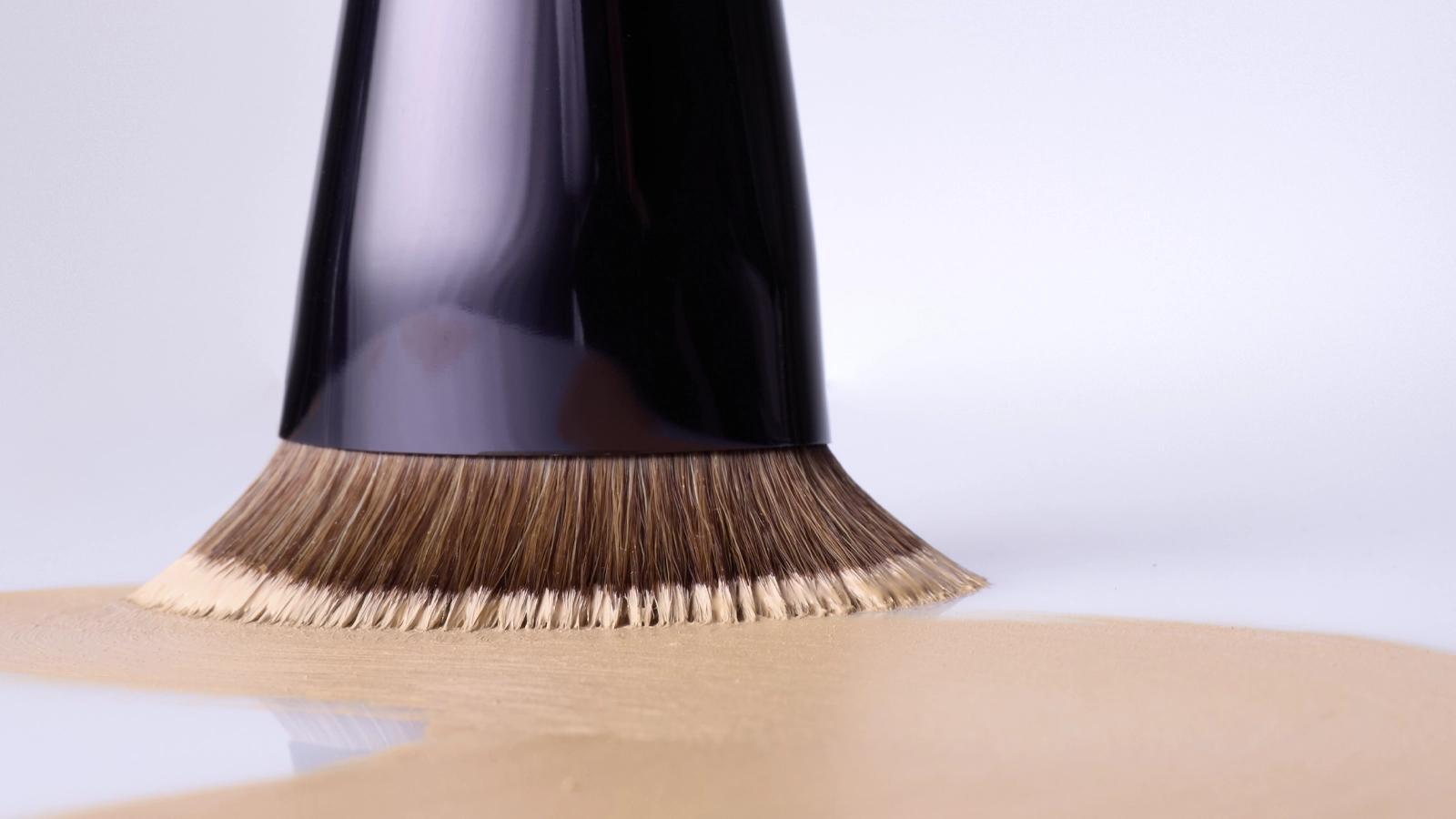

The Evolution of Modern Complexion Products
The beauty industry has fundamentally changed the way complexion products are formulated. Today’s consumers want skin-like finishes, breathable coverage, skincare-infused ingredients, and adaptable textures that move naturally with the skin.
But many brands are still pairing these next-generation formulas with application tools designed for an entirely different era of makeup.
That disconnect is creating a growing challenge for beauty brands.
Traditional brushes were originally engineered for dense powders, high-pigment creams, and fuller-coverage foundations. Modern formulas behave differently.
Serum foundations, skin tints, hybrid balms, cream-to-powder textures, and skincare-infused complexion products require more controlled application to perform as intended.
Why Traditional Brushes Can Limit Formula Performance
When the wrong brush is paired with these formulas, the consumer experience suffers:
- Streaking
- Patchiness
- Over-deposit
- Product waste
- Disturbed layers underneath the skin
- A finish that feels heavy instead of seamless
For brands, this creates a larger issue: even a strong formula can underperform if the application system is not engineered to support it.
As a leading makeup brush manufacturer, Anisa International believes application tools should be developed with formula performance in mind from the very beginning.
The Role of Advanced Fiber Technology
At Anisa International, we believe brushes are no longer secondary accessories. They are part of the formula performance system itself.
That philosophy is what led to the development of newer fiber technologies like HyFi™, engineered specifically for hybrid complexion formulas and modern skin behaviors.
Rather than oversaturating the skin, these fibers regulate pickup and release, creating softer diffusion and more controlled layering.
The result is:
- A more skin-like finish
- Better formula performance
- A more intuitive user experience
For brands developing private label makeup brushes, advanced fiber technology can help bridge the gap between formula design and consumer experience.
The Future of Formula and Tool Integration
As beauty continues moving toward skincare-makeup convergence, brands must begin thinking differently about application tools.
The future is not simply about creating better formulas. It is about engineering the formula and the application system together.
Why are modern complexion formulas outgrowing traditional brushes?
Many traditional brushes were designed for older makeup formats with heavier textures and higher pigment loads. Today’s lightweight, hybrid formulas often require more controlled application to achieve their intended performance.
How does brush design affect complexion product performance?
Brush design influences product pickup, release, diffusion, blendability, and coverage. The wrong brush can negatively impact the finish and overall user experience.
Why are custom makeup brushes important for modern beauty brands?
Custom makeup brushes can be engineered to complement specific formulas, helping brands improve application performance, consistency, and consumer satisfaction.
What should brands look for in a makeup brush manufacturer?
Brands should seek a makeup brush manufacturer with expertise in fiber technology, formula compatibility, consumer behavior, and product development.
Why is formula and applicator integration becoming more important?
As beauty products become more sophisticated, the application tool plays a greater role in determining how consumers experience formula performance, wear, and finish.